Syrian Conflict Goes Back 13 Centuries

The eastern Roman Empire was half alive, half gobbled up by the Arabs. And Iran — well, it had been wiped out as an enlightened, ancient empire a century before, in 651. After that, the Arabs took a long rest on the borders of Sogd modern-day central Asia, with its capital in Samarkand, which they began to conquer only in 712.

Why the rivalry? Why did the conquerors the Arabs so loathe the conquered the Iranians? That’s where the eighth century comes in. A hundred years after the Arabs destroyed Iran, their own empire, which stretched from Spain to the Chinese border, was a teetering wreck, being devoured from the inside by rivalries and bad government.Then, in 747, a revolt began in Iran that would eventually overthrow the Umayyad dynasty, replacing it with the Abbasids. The Abbasids would go on to build Baghdad and rule the huge Islamic caliphate for 500 years — until the arrival of Genghis Khan and his Horde.Yes, the Abbasids were Arabs, but their scribes, builders and literati were Iranians and the Arabs who cared to learn from them. As a result, the Iranians gradually all but took over their conqueror’s empire from the inside

InfadelHere is the crucial bit: The Arab-Iranian divide is far more than cultural. In the eighth century, subjugated Iran was also abandoning its ancient religion — Zoroastrianism — and creating its own, unique strand of Islam, Shiite, that stood in opposition to the dominant Sunni strand favored by the Abbasids.

A historian would tell us to remember that today’s conflict in Syria can be traced back to an Arab-Iranian — Sunni-Shiite – – rivalry that is 13 centuries old

via Syrian Conflict Goes Back 13 Centuries – Bloomberg.

Good Riddance to Brotherhood’s Fake Democrats

The saving grace in Egypt, King Abdulla of Jordan said, was that Mursi seemed too unsophisticated to successfully pull off his vision. “There’s no depth to the guy,” he said of Mursi. The king compared him unfavorably to Recep Tayyip Erdogan, the Islamist prime minister of Turkey. Like Mursi, the king asserted, Erdogan was also a false democrat, but one with patience. “Erdogan once said that democracy for him is a bus ride,” Abdullah said. “Once I get to my stop, I’m getting off.”

Unlike Mursi, however, Erdogan was masterful at manipulating a system that didn’t trust him, the king said. “Instead of the Turkish model, taking six or seven years — being an Erdogan — Mursi wanted to do it overnight.” Recent events in Turkey, including the government’s miscalculated response to mass protests, have shown that perhaps even Erdogan isn’t an Erdogan anymore.

Political IslamHad the military not intervened, though, the Muslim Brotherhood may have tried, over time, to make sure that Egypt’s first free and fair election was also its last. A number of Egyptian friends have written me in the past day, arguing that what the Egyptian people did — or, more to the point, what the Egyptian army, responding to the will of the people, did — was to forestall the rise of a new Hitler. If the Germans, who chose Adolf Hitler in a democratic election, had turned on him a year later, well, you know the rest. The analogy is overdone for so many reasons, but it is absolutely true that the Muslim Brotherhood is a totalitarian cult, not a democratic party.

via Good Riddance to Brotherhood’s Fake Democrats – Bloomberg.

Globalization’s Geopolical Future

Essay by a prescient Geo-strategist, whose work I follow.

Today’s globalization is suffering a populist blowback on a nearly global scale. Indeed, the only places not suffering such blowback are Latin America, Africa and Southeast Asia, frontiers where globalization’s widespread wealth creation is still resulting in very positive outcomes. Just about everywhere else, whether in the old West, the rising East or the Arab world, we’re seeing a build-up of social anger at globalization’s inequities and excesses that is stunning in its scope and persistence. In short, the world seems destined to either re-balkanize itself over these tensions or enter into a lengthy progressive era that corrects these imbalances and cleans up these corrupting trends.

bikini_burkhaHere’s where the value of the trans-Atlantic bond comes back in. For, remember, the old West has already processed the very same sort of mega-cycle back at the turn of the 20th century, when the world’s first version of a middle class initially came into its own as a potent political force. In that scary millenarian maelstrom, as today, terrorists, revolutionaries and radical fundamentalists abounded. In the end, both extremes of the ideological spectrum reached their catastrophically evil expression in the form of Stalinist Russia and Nazi Germany.

But not everybody in that old West got it wrong. Indeed, America and, to a lesser extent, Britain got it spectacularly right. Their shared Progressive Era was a classic example of co-evolution, in that both sides of “the pond” fed off each other’s experiments and successes — the women’s suffrage movement, social welfare, modern police departments, sanitation, mass transit, labor reforms, food and drug safety — while learning from their mistakes. But through it all, an economic landscape was substantially re-graded, leveled out, as it were, in a “fair deal” to the workingman that tamed all that raging populist anger. The leadership that was seen during the Progressive Era, embodied by the career of Theodore Roosevelt, is the same sort of leadership that America, and the world, needs today.Getting back to my “C-I-A” world of tomorrow, these three superpowers — two in the making, one actual — are currently in a race to see which can process its own domestic populist rage faster and more effectively.

via WPR Article | Trans-Atlantic Ties Still Key to Renewing U.S. Global Leadership.

Continue reading “Globalization’s Geopolical Future”

Nasty, Short and Brutish

Conventional cultural anthropology’s thinking was that tribal people were peaceful, that Darwinism had nothing to say about human behavior and culture, and that material resources were the cause of conflict.

Current Science is refuting all 3 assumptions. Mortality from violence is very common in small-scale societies today and in the past. Almost one-third of such people die in raids and fights, and the death rate is twice as high among men as among women. This is a far higher death rate than experienced even in countries worst hit by World War II. Thomas Hobbes’s “war of each against all” looks more accurate for humanity in a state of nature than Jean-Jacques Rousseau’s “noble savage,” though anthropologists today prefer to see a continuum between these extremes.

A Darwinian explanation of warfare would imply that similar kinds of violence might have evolved in other group-living animals. In recent years, Richard Wrangham of Harvard University has described chronic intergroup violence among chimpanzees.

But what is the motive for such killing? Robert Walker of the University of Missouri, Columbia, and Drew Bailey of Carnegie Mellon University last year published a survey of “Body Counts in Lowland South American Violence” and concluded that motives include revenge for previous killings, jealousy over women, capture of women and children and, less often, theft of material goods. Come to think of it, sounds just like the Trojan War

via Mind & Matter: Noble Savages Points to Resolution in Study of War – WSJ.com.

Predicting 2013 – Opportunities and Threats

This report is the synthesis of a 48-hour crowdsourced brainstorming exercise, where over 60 Wikistrat analysts from around the world collaboratively explored the issues that will dominate the foreign policy agenda in 2013..

The year 2012 helped bring answers to a few of the questions that loomed large for foreign observers when the year began. We now know who will lead the United States for the next four years. We have confirmation that the Muslim Brotherhood and its affiliated branches across the Arab Middle East remain the dominant, if often struggling, political force in the countries where revolutions have toppled dictators. And we have learned, to little surprise, that the much-touted efforts by Washington to pivot towards Asia will remain constrained by the pullback from continuing crises in the Middle East, where major long-standing unresolved conflicts—notably the stand-off with Iran over its nuclear program and Israeli-Palestinian tensions—still occupy the front burner.

The distinction between threats and opportunities was not always clear, particularly because a well-managed threat can turn into an opportunity, just as the reverse is true. As expected, the ongoing developments in the turbulent Middle East occupied much of the analysts’ thoughts, suggesting numerous possible outcomes. But other areas of the world and other supranational trends also made the cut.

Here are some of the top negative & positive scenarios from Wikistrat’s simulation.

via Predicting 2013 – Opportunities and Threats.

The Overlooked Big Stories of 2012

Andres Oppenheimer is a Miami Herald syndicated columnist and a member of The Miami Herald team that won the 1987 Pulitzer Prize, has a nifty list of 5 important, but overlooked stories that will have big implications in the years ahead.

  • In 2017, US becomes World’s biggest oil producer
  • Corruption’s threat to China’s Leadership’s legitimacy
  • The Trans Pacific Trade Partnership
  • Secessionist movements shaking Europe

Oppenheimer: The really important news of 2012 – Andres Oppenheimer – MiamiHerald.com.

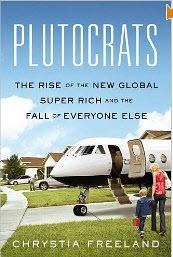
Plutocrats: The Rise of the New Global Super-Rich and the Fall of Everyone Else

Extractive states are controlled by ruling elites whose objective is to extract as much wealth as they can from the rest of society. Inclusive states give everyone access to economic opportunity; often, greater inclusiveness creates more prosperity, which creates an incentive for ever greater inclusiveness. Elites that have prospered from inclusive systems can be tempted to pull up the ladder they climbed to the top. Eventually, their societies become extractive and their economies languish.

Several recent studies have shown that in America today it is harder to escape the social class of your birth than it is in Europe. Educational attainment, which created the American middle class, is no longer rising.

Economists point out that the woes of the middle class are in large part a consequence of globalization and technological change. Culture may also play a role. In his recent book on the white working class, the libertarian writer Charles Murray blames the hollowed-out middle for straying from the traditional family values and old-fashioned work ethic that he says prevail among the rich (whom he castigates, but only for allowing cultural relativism to prevail).

The crony capitalism of today’s oligarchs is far subtler than Venice’s. It works in two main ways.

The first is to channel the state’s scarce resources in their own direction. This is the absurdity of Mitt Romney’s comment about the “47 percent” who are “dependent upon government.” The reality is that it is those at the top, particularly the tippy-top, of the economic pyramid who have been most effective at capturing government support — and at getting others to pay for it.

Exhibit A is the bipartisan, $700 billion rescue of Wall Street in 2008. Exhibit B is the crony recovery. The economists Emmanuel Saez and Thomas Piketty found that 93 percent of the income gains from the 2009-10 recovery went to the top 1 percent of taxpayers. The top 0.01 percent captured 37 percent of these additional earnings, gaining an average of $4.2 million per household.

via The Self-Destruction of the 1 Percent – NYTimes.com.

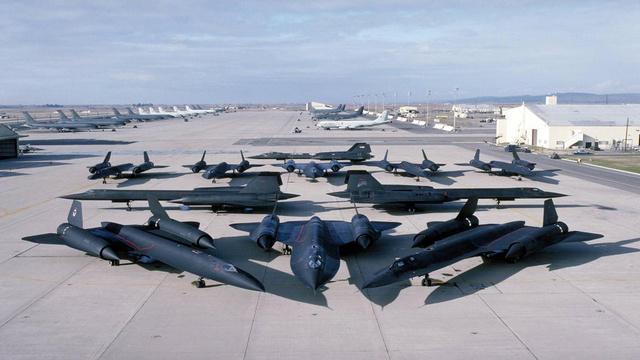
Ouracing Enemy Missles in the World’s Fastest Plane

Excerpts from Sled Driver, the amazing book by one of the SR-71 pilots, Major Brian Shul:

Plane Porn – Click to Enlarge

In April 1986, following an attack on American soldiers in a Berlin disco, President Reagan ordered the bombing of Muammar Qaddafi’s terrorist camps in Libya. My duty was to fly over Libya and take photos recording the damage our F-111’s had inflicted. Qaddafi had established a ‘line of death,’ a territorial marking across the Gulf of Sidra , swearing to shoot down any intruder that crossed the boundary. On the morning of April 15, I rocketed past the line at 2,125 mph.

I was piloting the SR-71 spy plane, the world’s fastest jet, accompanied by Maj Walter Watson, the aircraft’s reconnaissance systems officer (RSO). We had crossed into Libya and were approaching our final turn over the bleak desert landscape when Walter informed me that he was receiving missile launch signals. I quickly increased our speed, calculating the time it would take for the weapons-most likely SA-2 and SA-4 surface-to-air missiles capable of Mach 5 – to reach our altitude. I estimated that we could beat the rocket-powered missiles to the turn and stayed our course, betting our lives on the plane’s performance

via Holy Crap—Look at All These SR-71 Blackbirds Together!.

The Dirty Solar Panel Fight Over Clean Energy

Chinese technocrats set out to create an industry that would dominate the world, and they succeeded. They aided solar cell manufacturers with easy credit from state banks—perhaps as much as $18 billion of cheap loans—and, some say, subsidies. As a result of central and local government support, Chinese manufacturers began to expand rapidly. Chinese competitors now own 70% of the world’s wafer-producing capacity.

Make that overcapacity. “Massive subsidies and state intervention have stimulated overcapacity more than 20 times total Chinese consumption and close to double total global demand,” said Milan Nitzschke, president of EU ProSun, in a statement released late last month. The company alleges that 90% of Chinese production had to be exported and that Beijing used subsidies to keep its manufacturers in business.

The powerful Chinese National Development and Reform Commission wants to see two-thirds of panel makers go out of business.  Only the largest producers, which are presently nonviable, will survive.

In short, central government technocrats, to salvage their industrial policy, will now have to destroy what they worked so hard to create.

via Sun Sets on China’s Solar Industry – Forbes.

Is U.S. Economic Growth Over? Faltering Innovation Confronts the Six Headwinds

The analysis links periods of slow and rapid growth to the timing of the three industrial revolutions (IR’s), that is, IR #1 (steam, railroads) from 1750 to 1830; IR #2 (electricity, internal combustion engine, running water, indoor toilets, communications, entertainment, chemicals, petroleum) from 1870 to 1900; and IR #3 (computers, the web, mobile phones) from 1960 to present. It provides evidence that IR #2 was more important than the others and was largely responsible for 80 years of relatively rapid productivity growth between 1890 and 1972. Once the spin-off inventions from IR #2 (airplanes, air conditioning, interstate highways) had run their course, productivity growth during 1972-96 was much slower than before. In contrast, IR #3 created only a short-lived growth revival between 1996 and 2004. Many of the original and spin-off inventions of IR #2 could happen only once – urbanization, transportation speed, the freedom of females from the drudgery of carrying tons of water per year, and the role of central heating and air conditioning in achieving a year-round constant temperature.

Even if innovation were to continue into the future at the rate of the two decades before 2007, the U.S. faces six headwinds that are in the process of dragging long-term growth to half or less of the 1.9 percent annual rate experienced between 1860 and 2007. These include demography, education, inequality, globalization, energy/environment, and the overhang of consumer and government debt. A provocative “exercise in subtraction” suggests that future growth in consumption per capita for the bottom 99 percent of the income distribution could fall below 0.5 percent per year for an extended period of decades.

via Is U.S. Economic Growth Over? Faltering Innovation Confronts the Six Headwinds.