
Potential future North Korean canon fodder (Party Officials) are bused in to watch 4 of these guns firing 50 caliber-size bullets that pulverize the prisoner.


Potential future North Korean canon fodder (Party Officials) are bused in to watch 4 of these guns firing 50 caliber-size bullets that pulverize the prisoner.
I also watched recent video of ISIS members in a museum smashing (alleged) archaeological relics from the very ancient Mesopotamian past. I felt a certain sense of historical irony while doing so. I wondered as I watched them use sledgehammers and power drills on a 3,000 year old Assyrian statue if they realized that they were following the ancient Assyrian playbook as they tried to erase the region’s past. The Assyrians of that era were masters at the art of atrocity marketing. The concept of publicizing horrific cruelty to cow and intimidate subjects or opponents has a long history, and only fell out of style relatively recently (and not everywhere).
 It’s only in the last century or so that public executions, for example, have become rare. Having people view a burning, beheading or hanging (with or without a torture appetizer) was thought to be something that reinforced law and authority and demonstrated that justice was being carried out. Often it was thought an edifying thing to have children watch.
How would the German public living in the Third Reich have reacted to ISIS-like, slickly produced films showing the scenes inside a death camp gas chamber while people were dying? Even in a nation brainwashed by state-fostered anti-Semitism, it’s hard to imagine the reaction being anything the Nazi regime would have considered positive.
The fact that the Islamic State’s marketing gurus feel otherwise is interesting. Perhaps its more evidence bolstering the idea that ISIS seeks to return to the values of an earlier, much more harsh historical era. If so,we might be seeing a visual and visceral example of what our ancestors might have done with a good TV studio.
If online video existed in the Middle Ages, does the burning of Joan of Arc go viral? Would it go viral today?
via Marketing atrocity: Ancient Assyrians would have understood Islamic State’s methods.
The United States continues to make up more than 22 percent of the world’s economy. It continues to dominate the world’s oceans and has the only significant intercontinental military force. Since 1880, it has been on an uninterrupted expansion of economy and power. Even the Great Depression, in retrospect, is a minor blip. This expansion of power is at the center of the international system, and our forecast is that it will continue unabated.
The greatest advantage the United States has is its insularity. It exports only 9 percent of its GDP, and about 40 percent of that goes to Canada and Mexico. Only about 5 percent of its GDP is exposed to the vagaries of global consumption. Thus, as the uncertainties of Europe, Russia and China mount, even if the United States lost half its exports — an extraordinary amount — it would not be an unmanageable problem.
 The United States is also insulated from import constraints. Unlike in 1973, when the Arab oil embargo massively disrupted the U.S. economy, the United States has emerged as a significant energy producer. Although it must import some minerals from outside NAFTA, and it prefers to import some industrial products, it can readily manage without these. This is particularly true as industrial production is increasing in the United States and in Mexico in response to the increasing costs in China and elsewhere.
The Americans also have benefited from global crises. The United States is a haven for global capital, and as capital flight has taken hold of China, Europe and Russia, that money has flowed into the United States, reducing interest rates and buoying equity markets. Therefore, though there is exposure to the banking crisis in Europe, it is nowhere near as substantial as it might have been a decade ago, and capital inflows counterbalance that exposure. As for the perennial fear that China will withdraw its money from American markets, that will happen slowly anyway as China’s growth slows and internal investment increases. But a sudden withdrawal is impossible. There is nowhere else to invest money. Certainly the next decade will see fluctuations in U.S. economic growth and markets, but the United Stares remains the stable heart of the international system. While I subscribe to Strafor’s Intelligence service, they have chosen to make this intriguing report, on possible future geopolitical trends, available to the public via the link below.
we are witnessing four changes in international affairs that will lead to renewed great power conflict.
The first change is the slow disengagement of the United States from the dominating role it has played after World War II, marked most notably by a lowering of its defense spending and commitments. America has retreated from its role of protector of the world order, but the current occupant of the White House clearly ranks foreign affairs as an annoyance compared to an ambitious domestic agenda and has telegraphed his desire for America to have either a light or non-existent footprint across much of the globe.
The slow American withdrawal coincides with the second change, in which four of the current great powers (Russia, China, India, and Japan) are revaluating, amplifying, or changing aspects of their grand strategy in a way that resembles a similar reshuffling that took place late in the nineteenth century.
Third, there are ominous parallels between the cauldron that created the conflict of the Great War and those simmering today. China, playing the role of nineteenth-century Germany, seems determined to upset the economic and military stability created by the United States and Japan, especially in the area of naval power and power projection. Japan is playing the role of the United Kingdom, an old power clinging to its power base by mobilizing nationalism and militarism. Russia, attempting to resurrect its glory by aggressive action, reminds us of a turn-of-the-century France. India, coming on the world stage for the first time, yet not quite ready for a big role, is reminiscent of the newly unified Italian peninsula of 1861.
via Great Power Conflict: Will It Return? | World Affairs Journal.
 The US has made the strategic choice to put its resources into engineering better attack tools and an infrastructure to support them. In a way it’s a smart choice. It’s a truism that the cyber battlefield is asymmetric—a defender has to get it right every time, while an attacker only has to succeed once. If the US spends a billion dollars in cyber defense, it will still be vulnerable. But spend it on cyber attack, and you get the most advanced computer espionage and sabotage tools that history has ever seen.
The tool hides itself encrypted in the Windows registry, so that anti-virus software can’t find it on the computer’s disk. It carves out its own virtual file system on your machine to store data for exfiltration. It uses a well-engineered piece of software called a bootkit to control the operating system from the ground up. There are update mechanisms, dozens of plug-ins, a self-destruct function, massive code obfuscation, hundreds of fake websites to serve as command-and-control. One of the NSA’s malware plug-ins can even reprogram your hard drive’s firmware, allowing the implant to survive a complete disk wipe.
via Surprise! America Already Has a Manhattan Project for Developing Cyber Attacks | WIRED.
The argument that globalization does not necessarily lead to peace is a pretty easy one to make, the usual example being that German-British trade was going brilliantly right up to World War I. Arguing that globalization leads to war is an altogether different enterprise. In his new book, When Globalization Fails: The End of Pax Americana, James Macdonald comes daringly close to showing that globalization, as a system of interdependence among major states, is an inherently unstable system that breeds insecurity among great powers. The interdependence feeds the insecurity.
 If our multipolar world is going the way of Macdonald’s analysis, we would expect to see greater regionalization under the direction of one or another regional hegemon — and that does appear to be the case, despite important countervailing trends such as improving U.S.-India relations, which have rescued the World Trade Organization. In Central Asia, Russia’s Eurasian Economic Union and China’s New Silk Road confront each other as opposing regional power plays. Asia’s export-led economies are also becoming more regional: Asian exports are increasingly purchased within Asia itself as demand from advanced economies remains weak. And regardless of the degree to which “re-shoring” exists, the desirability of siting production in closer physical proximity has captured Western political imaginations. Meanwhile all the major powers are focused on strengthening regional security arrangements, and all the major emerging powers are building their defenses, including the blue-water navies, whose major “defensive” purpose is to defend raw-material supply routes.
There are huge differences between today and earlier eras when the dynamics of globalization led to large-scale conflict. Nuclear weaponry is one; the lack of demographic-growth pressures in advanced economies is another. But we are nonetheless entering dangerous times.
 According to data released by Google, six of the top eight porn-searching countries are Muslim states. Pakistan tops the list at number one, followed by Egypt at number two. Iran, Morocco, Saudi Arabia and Turkey come in at numbers four, five, seven and eight, respectively. Pakistan leads the way in porn searches for animals like pigs, donkeys, dogs, cats and snakes.
 One of the more astute analysts that will make you think.
Q: Why doesn’t China want Russia to fight with the West?
A: I think you have to understand that China is patient. China is growing. China has 1.3 billion people. The world will come to China. If China waits, China will have more power, more influence and be able to determine outcomes to their favor, without war, without conflict. They can just use their influence.
The Russians, of course, are declining and so Russian power is greater today than it will be in five or 10 years’ time. If you’re China, you really don’t want the Russians to “rock the boat” too much in the near term. Causing problems for the U.S. is fine, but you don’t want them to become a pariah state for everyone else.
Q: Is there a possibility of a Cold War between the U.S. and China?
A: Longer term, that is a bigger concern. It’s not a concern today. But if you asked me in five or 10 years’ time, one of the potential scenarios of post-G-Zero is that the United States and China fundamentally move into different blocks. It’s possible.
Q: Will China become a big power, as big as the U.S?
A: No. The future is a long time, but if you ask me in 10 years’ time, China will probably be the largest economy, but their military will be a tiny fraction of that of the United States. Their technological capacity will be a tiny fraction of the U.S. Their energy production capacity will be a tiny fraction of the United States. Their diplomatic capabilities will be a tiny fraction of the United States. Their soft power will be a tiny fraction of the United States. Their cultural power will be a tiny fraction of the United States. Their universities will be so much worse. They will be a superpower, looking purely in terms of their economic might and they will not be a superpower in any other way.
via The world post-G-Zero: US, China Cold War possible, says Ian Bremmer- Nikkei Asian Review.
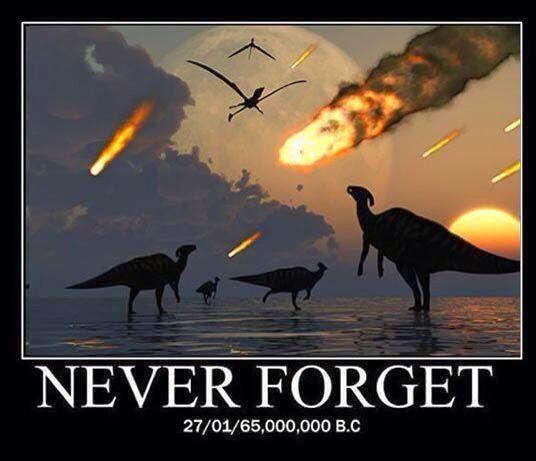
http://www.telegraph.co.uk/news/earth/environment/11276913/So-this-is-how-the-world-ends…-isnt-it.html
Aside from the rise of the machines, many potential threats have been identified to our species, our civilisation or even our planet itself. To keep you awake at night, here are seven of the most plausible.
The U.S. has so far been prepared to act as the guarantor of international stability, but may not be willing—or able—to do so indefinitely.
Though the era just before World War I, with its gas lighting and its horse-drawn carriages, seems very far off and quaint, it is similar in many ways—often unsettlingly so—to ours, as a look below the surface reveals. The decades leading up to 1914 were, like our own time, a period of dramatic shifts and upheavals, which those who experienced them thought of as unprecedented in speed and scale. The use of electricity to light streets and homes had become widespread; Einstein was developing his general theory of relativity; radical new ideas like psychoanalysis were finding a following; and the roots of the predatory ideologies of fascism and Soviet communism were taking hold.
 Globalization—which we tend to think of as a modern phenomenon, created by the spread of international businesses and investment, the growth of the Internet, and the widespread migration of peoples—was also characteristic of that era. Globalization can also have the paradoxical effect of fostering intense localism and nativism, frightening people into taking refuge in the comfort of small, like-minded groups. One of the unexpected results of the Internet, for example, is how it can narrow horizons so that users seek out only those whose views echo their own and avoid websites that might challenge their assumptions.
While history does not repeat itself precisely, the Middle East today bears a worrying resemblance to the Balkans then.
It is tempting—and sobering—to compare today’s relationship between China and the U.S. with that between Germany and England a century ago. Now, as then, the march of globalization has lulled us into a false sense of safety.
Like the world of 1914, we are living through changes in the nature of war whose significance we are only starting to grasp.
Read on at http://www.brookings.edu/research/essays/2013/rhyme-of-history
