How to Disagree

If we’re all going to be disagreeing more, we should be careful to do it well. What does it mean to disagree well? Most readers can tell the difference between mere name-calling and a carefully reasoned refutation, but I think it would help to put names on the intermediate stages. So here’s an attempt at a disagreement hierarchy:

Source: How to Disagree

The Developing World Thinks Hitler Is Underrated

http://foreignpolicy.com/2016/10/05/the-developing-world-thinks-hitler-is-underrated-duterte-world-war-ii-nazi-politics/

(COL) *20.04.1889-30.04.1945+ Politiker, NSDAP, D Lagebesprechung im Hauptquartier der Heeresgruppe S¸d in Saporoshje (Ukraine); Hitler mit der Generalit‰t am Kartentisch (v.l.): Generalfeldmarschall Erich von Manstein, Adolf Hitler, General Theodor Busse, Generalfeldmarschall Ewald von Kleist - 19.02.1943 Foto: Walter Frentz "english_caption" Hitler and the generals look at maps during a briefing at the headquarters of 'Heeresgruppe Sued' (Army Squad South) at Saporoshje (Ukraine). From left: General Field Marshal Erich von Manstein, Adolf Hitler, General Theodor Busse, General Field Marshal Ewald von Kleist - 02.19.1943 Picture: Walter Frentz "english_e

– 19.02.1943
Foto: Walter Frentz
“english_caption” Hitler and the generals look at maps during a briefing at the headquarters of ‘Heeresgruppe Sued’ (Army Squad South) at Saporoshje (Ukraine). From left: General Field Marshal Erich von Manstein, Adolf Hitler, General Theodor Busse, General Field Marshal Ewald von Kleist
– 02.19.1943
Picture: Walter Frentz “english_e

Yet in much of the developing world, where ignorance regarding the Holocaust and Hitler’s fantasies of world domination is rife, he is perceived less as a mass murderer and ideologue of global conquest than as a stern disciplinarian who addressed social ills in a briskly efficient manner. His is a legacy of “law and order,” not of horrific chaos and collapsed cities. Additionally, and crucially, in the non-Western world the name Hitler can connote “anti-imperialist rebel” due to the German leader’s nationalistic struggle against “Anglo-French-American-Zionist domination.”

Continue reading “The Developing World Thinks Hitler Is Underrated”

Why Trump and Sanders

FB_IMG_1463465800817

What do Bernie Sanders and Donald Trump have in common?  – an authoritarian agenda.

The rise of Donald Trump has been accompanied by predictable murmurs of “only in America”. But the Trump phenomenon is better understood as part of a global trend: the return of the “strongman” leader in international politics.

Rather than leading the way, America has arrived late at this dispiriting party. Historians might one day highlight the year 2012 as the turning point. In May of that year Vladimir Putin returned to the Kremlin as president of Russia. A few months later Xi Jinping was installed as general secretary of the Chinese Communist party.

 Democracies elected Hitler and Mussolini to get their dysfunctional democracies working again. Citizens were willing to give up certain rights for the security of knowing that Mussolini would ” get the trains to run on time”.

In fact, Mr Trump exhibits many of the characteristics of the current crop of strongman leaders, including Messrs Putin, Xi, Erdogan, Sisi, Modi, Orban and Duterte.

Bernie Sanders promises that the power of government would rectify disgruntled voters discontent with Income inequality and wage reversals. Donald Trump promised that his bullying would get things back to where they once were. Both are authoritarian attitudes, relecting the world-wide trend of the return of the strongmen.

Rise of the Strongman

Great Power Conflict: Will It Return?

we are witnessing four changes in international affairs that will lead to renewed great power conflict.

The first change is the slow disengagement of the United States from the dominating role it has played after World War II, marked most notably by a lowering of its defense spending and commitments. America has retreated from its role of protector of the world order, but the current occupant of the White House clearly ranks foreign affairs as an annoyance compared to an ambitious domestic agenda and has telegraphed his desire for America to have either a light or non-existent footprint across much of the globe.

The slow American withdrawal coincides with the second change, in which four of the current great powers (Russia, China, India, and Japan) are revaluating, amplifying, or changing aspects of their grand strategy in a way that resembles a similar reshuffling that took place late in the nineteenth century.

Third, there are ominous parallels between the cauldron that created the conflict of the Great War and those simmering today. China, playing the role of nineteenth-century Germany, seems determined to upset the economic and military stability created by the United States and Japan, especially in the area of naval power and power projection. Japan is playing the role of the United Kingdom, an old power clinging to its power base by mobilizing nationalism and militarism. Russia, attempting to resurrect its glory by aggressive action, reminds us of a turn-of-the-century France. India, coming on the world stage for the first time, yet not quite ready for a big role, is reminiscent of the newly unified Italian peninsula of 1861.

via Great Power Conflict: Will It Return? | World Affairs Journal.

See Crowd-Sourced Map of Global Conflict

Click on the map and you are seeing an overview of major global activity each day, as captured by the world’s news media and monitored by the GDELT Project. All protest and conflict events are grouped together by city/location. For the animated map layer, if a location has both protest and conflict events, it is colored by whichever there are more of. All dots on the animated map are the same size, regardless of the number of events at that location, due to current limitations of the animation system. For the daily map layers, dots are displayed separately at each location for protests and conflict and are sized based on the total volume of coverage devoted to that type of event at that location. Thus, locations with more “important” events will be displayed using a larger dot to indicate major evolving situations. Since some events may not have recognizable geographic markers or may occur at the country level, such events are displayed at the centroid of the country, except for the United States, where only events recorded at the state or finer resolution are shown. When your pointer turns into a hand, click and you’ll see the news sources harvested by web bots of the US Institute for Peace.

via Mapping A World in Motion: A Daily Dashboard of Global Conflict | GDELT Official Blog.

What world can teach U.S. about entitlements

Entitlement Lessons From Abroad A new report, by the Center for Strategic and International Studies, notes that many countries have recently enacted reforms that have trimmed benefit formulas, raised retirement ages, and put in place new funded pension systems that supplement or partially substitute for pay-as-you-go government systems.

Several countries – including Germany, Italy, Japan, and Sweden – have gone further and introduced “automatic stabilizers” into their public pension systems that, directly or indirectly, index benefits to the growth in the payroll tax base. These stabilizers may differ in design, but they have two crucial characteristics in common. First, they are all expressly designed to offset the full impact of demographically driven cost growth. And second, they are all self-adjusting. In effect, they put entitlements on a new kind of autopilot – one that is preprogrammed for cost constraint rather than for cost growth.

ChangeInEntitlementBenefits 2010to2040It’s ironic that other developed countries, most of which have faster-aging populations and more expansive welfare states than the United States, are leading the way on entitlement reform.  Part of the explanation may be that, until recently, America’s age wave still loomed over the horizon, while in Europe and Japan aging populations have been burdening public budgets, forcing up payroll tax rates, and slowing economic growth for decades.

Part of the answer may also lie in America’s peculiar entitlement ethos.  In Europe, government benefit programs may be fiercely defended, with the opponents of reform manning the barricades and calling general strikes. But in the end, everyone understands that they are part of a social contract that is subject to renegotiation and revision.  In the United States, much of the public views Social Security and Medicare as quasi-contractual arrangements between individuals and the state.  This mindset, which is encouraged by the misleading insurance metaphors in which the programs are cloaked, may make old-age benefits more difficult to reform in the United States than in Europe’s large welfare states.

via What world can teach U.S. about entitlements – Global Public Square – CNN.com Blogs.

The Overlooked Big Stories of 2012

Andres Oppenheimer is a Miami Herald syndicated columnist and a member of The Miami Herald team that won the 1987 Pulitzer Prize, has a nifty list of 5 important, but overlooked stories that will have big implications in the years ahead.

  • In 2017, US becomes World’s biggest oil producer
  • Corruption’s threat to China’s Leadership’s legitimacy
  • The Trans Pacific Trade Partnership
  • Secessionist movements shaking Europe

Oppenheimer: The really important news of 2012 – Andres Oppenheimer – MiamiHerald.com.

The Coming Surge of Cuban Refugees

In October, the Cuban government announced that it would no longer require the much-hated exit visa for anyone wishing to travel abroad. All a Cuban citizen will need is a passport and a visa for the country he plans to visit. This new Cuban policy takes effect January 14th.

2006_08_01t121905_450x332_us_cuba.jpgThe problem is, under current American law, a “visit” to the United States can immediately award a Cuban full refugee status, then permanent residency and citizenship, under the Cuban Adjustment Act of 1966.

For decades, Cubans have been trying to sail to the US and then dock or swim ashore before immigration agents catch up with them. For those who made it past the US Coast Guard gauntlet, once their feet touched the beach they were given legal admission. During the fiscal year that ended in September, the Coast Guard said it caught 1,275 Cubans trying to arrive by boat—the highest total since 2008. Uncounted others made it ashore, where they immediately received their unique American embrace.

Starting January 14th, however, Cuba will allow them to leave by any means of their choice. And all they’ll have to do is walk off the airplane in Miami or anywhere else in the US to be awarded refugee status. The change could lead to many thousands of new Cuban refugees every month, joining the two million Cubans and their descendants already here. But you don’t hear anyone in Washington even mentioning this problem, given the urgent concerns about Iran, North Korea, the fiscal cliff, and so much else.

via The Coming Surge of Cuban Refugees | World Affairs Journal.

A Quiet Revolution: Drug Decriminalisation Policies in Practice Across the Globe

This report looks at over 20 countries that have adopted some form of decriminalisation of drug possession, including some States that have only decriminalised cannabis possession. The main aim of the report was to look at the existing research to establish whether the adoption of a decriminalised policy led to significant increases in drug use – the simple answer is that it did not.

via A Quiet Revolution: Drug Decriminalisation Policies in Practice Across the Globe.

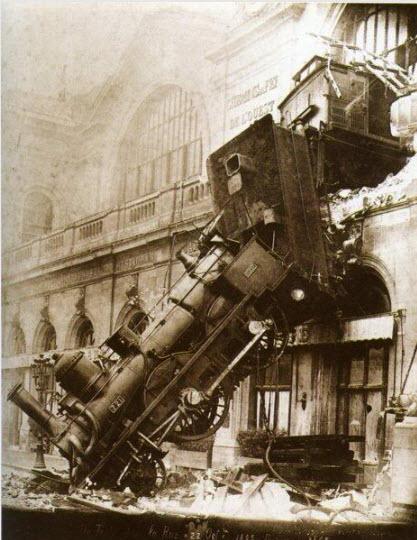
California Doesn’t Learn From China’s Train Wreck

In California’s Legislature just authorized to spend, with Federal assistance, an under-estimated $100 billion to build a route between San Francisco and Los Angeles that will consist of a government monopoly riding on tracks near one of the largest earthquake faults in the world for most of its length, all to deliver passengers slower and at greater overall cost between two fixed points.  Airlines give consumers a choice of carriers and airports on either end of that route, will deliver passengers more quickly, and probably with a much wider choice of departure and arrival times.

In China the problem — beyond the idea of spending untold billions on the antiquated technology of static choo-choo trains — is that the three people making all these wonderful decisions  now have a high-speed rail system plagued by failurecorruption, out-of-control costs and legitimate safety concerns

The fact is that China’s train wreck was eminently foreseeable. High-speed rail is a capital-intensive undertaking that requires huge borrowing upfront to finance tracks, locomotives and cars, followed by years in which ticket revenue covers debt service — if all goes well. “Any . . . shortfall in ridership or yield, can quickly create financial stress,” warns a 2010 World Bank staff report.

Such “shortfalls” are all too common. Japan’s bullet trains needed a bailout in 1987. Taiwan’s line opened in 2007 and needed a government rescue in 2009. In France, only the Paris-Lyon high-speed line is in the black.

via China’s train wreck – The Washington Post.