Why the Arabic World Turned Away from Science

From coffee to cheques and the three-course meal, the Muslim world has given us many innovations that we take for granted in daily life. Click on this link to see 20 of the their greatest discoveries. How Islamic inventors changed the world – Science – News – The Independent.

Today Muslims are a fifth of the world’s population, yet contribute only 7% of the world’s GDP. Arabs comprise 5 percent of the world’s population, but publish just 1.1 percent of its books, according to the U.N.’s 2003 Arab Human Development Report. Between 1980 and 2000, Korea granted 16,328 patents, while nine Arab countries, including Egypt, Saudi Arabia, and the U.A.E., granted a combined total of only 370, many of them registered by foreigners.

What went wrong?

The Islamic turn away from scholarship actually preceded the civilization’s geopolitical decline — it can be traced back to the rise of the anti-philosophical Ash’arism school among Sunni Muslims, who comprise the vast majority of the Muslim world.

While the Mu’tazilites had contended that the Koran was created and so God’s purpose for man must be interpreted through reason, the Ash’arites believed the Koran to be coeval with God — and therefore unchallengeable. At the heart of Ash’ari metaphysics is the idea of occasionalism, a doctrine that denies natural causality. Put simply, it suggests natural necessity cannot exist because God’s will is completely free. Ash’arites believed that God is the only cause, so that the world is a series of discrete physical events each willed by God.

The Ash’ari view has endured to this day. Its most extreme form can be seen in some sects of Islamists. For example, Mohammed Yusuf, the late leader of a group called the Nigerian Taliban, explained why “Western education is a sin” by explaining its view on rain: “We believe it is a creation of God rather than an evaporation caused by the sun that condenses and becomes rain.” As Robert R. Reilly argues in The Closing of the Muslim Mind (2010), “the fatal disconnect between the creator and the mind of his creature is the source of Sunni Islam’s most profound woes.”

Inquiry into the history of Arabic science, and the recovery and research of manuscripts of the era, may have a beneficial effect — so long as it is pursued in an analytical spirit. That would mean that Muslims would use it as a resource within their own tradition to critically engage with their philosophical, political, and founding flaws. If that occurs, it will not arise from any Western outreach efforts, but will be a consequence of Muslims’ own determination, creativity, and wisdom — in short, those very traits that Westerners rightly ascribe to the Muslims of the Golden Age
The New Atlantis » Why the Arabic World Turned Away from Science.
The End of Cheap Food

Ever since the days of Thomas Malthus, who famously predicted in the 18th century that population increases would far outstrip gains in food production, those who have foreseen global famine have been proved relentlessly wrong.

Twice before, our species has been saved from starvation by science. But as we move towards a planet of eight billion people, we are in uncharted territory. Let’s hope a new Norman Borlaug is waiting in the wings.

Shortly after Malthus made his grim prediction, we saw the first Agricultural Revolution – the systematic application of science and technology to farming. New varieties of crops, an understanding of crop rotation and the development of mechanisation saw yields soar. Hunger was also averted by the development of a global trade in food, spurred by the advent of steam ships and refrigeration.

Still, the population kept rising – but along came a saviour in the form of Norman Borlaug, one of the most important human beings ever to have lived. Hitler will always be famous for killing millions; yet Dr Borlaug, an American food scientist, saved billions, and yet relatively few of us have heard of him. In the 1960s, he bred new varieties of wheat and rice and other crops, a breakthrough now called the Green Revolution. If it hadn’t been for him, then Asia and perhaps South America would have seen serious famine in the 1970s.

Now we are reaching the limits of the Green Revolution.


via Can science prevent the great global food crisis? – Telegraph.

A Computer Built For Mars

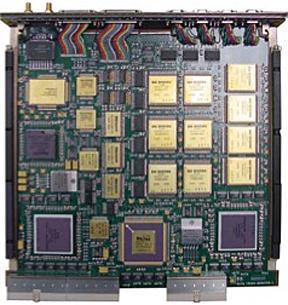
The PowerPC RAD750 chip at the heart of the Curiosity Mars rover’s central computer can withstand temperature extremes and massive doses of space radiation without the dreaded ‘blue screen of death.’

“First, you have to develop the radiation hardening techniques and actually implement them in the design,” said Scott Doyle, a BAE systems engineer for satellite electronics. “The next step is you have to qualify each of those individual components and that qualification is normally a year, a year-and-a-half, just to do that.””Then they get integrated on the board, and that board has to go through qualification activity to prove out the board. Then once that board gets integrated into the satellite at the system level, there’s several years worth of qualification testing that goes in at the satellite level. You add all that up, you’re talking five to eight years of qualification work.”

The resulting computers can cost anywhere from $200,000 to a half-million dollars. While all that might seem like overkill to an outsider, space-based computers simply have to work. “There’s no repairman in space,” Doyle said.

But given the unavoidable limitations in processing speed and memory, Curiosity’s programmers face a daunting task when it comes to writing software. “What’s hard about this, my phone has a processor that’s 10 times as fast as the processor that’s on Curiosity and it has 16 times as much storage as Curiosity has and my phone doesn’t have to land anything on Mars,” Cichy said. “All my phone has to do is follow (a friend’s) Twitter feed.”

via Slow, but rugged, Curiosity’s computer was built for Mars | Cutting Edge – CNET News.

Amazing Micron Pictures

Wellcome Image Awards 2012 | Wellcome Image Awards.

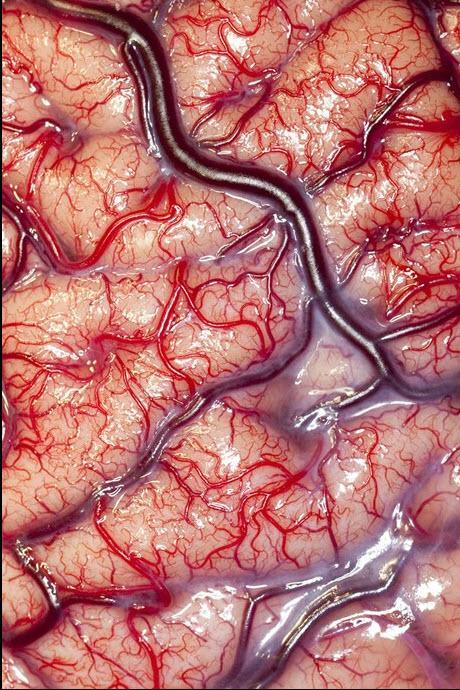
Click on the link above to see the 16 finalists and the winning photo closeup of a living brain.

Catherine Draycott, head of Wellcome Images and a member of the judging panel, said: ‘The Wellcome Image Awards are unique in that the winners are chosen for their scientific and technical merit as much as for their aesthetic appeal.

‘They offer people a chance to get closer to science and research and see it in a different way, as a source of beauty as well as providing important information about ourselves and the world around us.
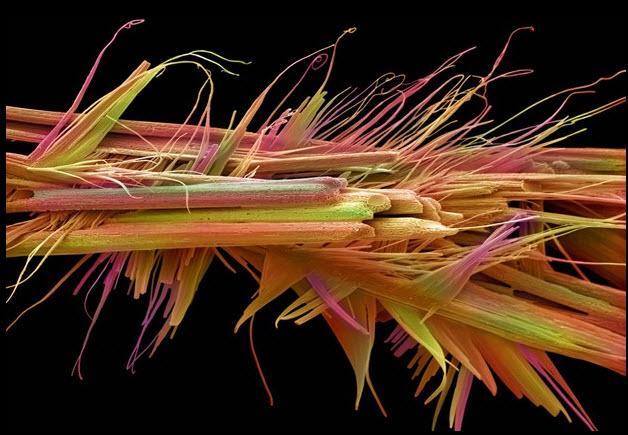
The other picture here  is of a Caffeine Crystal.

Newly Discovered Mayan Calendar Disproves End-of-the-World Hoopla

Oldest Known Mayan Astronomical Calendar Stuns Scientists – TIME.

Archaeologists, excavating the ninth-century Maya complex of Xultun in Guatemala, say they have found what may have been a workspace for the town’s scribe. Paintings on the walls, they report, appear to include calculations related to the Maya  calendar.

The researchers, writing in today’s edition of the journal Science, say the calculations project 7,000 years into the future. There’s no hint that the calendar ends on Dec. 21, 2012, despite popular belief.

“Why would they go into those numbers if the world is going to come to an end this year?” said Anthony Aveni at Colgate University, a scholar of Maya  astronomy and a co-author of the paper. “You could say a number that big at least suggests that time marches on.”

“We Can See Through the Big Bang to the Universe That Existed in the Aeon Before Ours”

The core concept in Penrose’s theory is the idea that in the very distant future the universe will in one sense become very similar to how it was at the Big Bang. Penrose says that “at these points the shape, or geometry, of the universe was and will be very smooth, in contrast to its current very jagged form. This continuity of shape, he maintains, will allow a transition from the end of the current aeon, when the universe will have expanded to become infinitely large, to the start of the next, when it once again becomes infinitesimally small and explodes outwards from the next big bang. Crucially, he says, the entropy at this transition stage will be extremely low, because black holes, which destroy all information that they suck in, evaporate as the universe expands and in so doing remove entropy from the universe.”

via “We Can See Through the Big Bang to the Universe That Existed in the Aeon Before Ours” (Today’s Most Popular).

Stephen Hawking: “Humans Have Entered a New Stage of Evolution”

Steven HawkinsHawking says that we have entered a new phase of evolution. “At first, evolution proceeded by natural selection, from random mutations. This Darwinian phase, lasted about three and a half billion years, and produced us, beings who developed language, to exchange information.”

But what distinguishes us from our cave man ancestors is the knowledge that we have accumulated over the last ten thousand years, and particularly, Hawking points out, over the last three hundred.

“I think it is legitimate to take a broader view, and include externally transmitted information, as well as DNA, in the evolution of the human race,” Hawking said.

In the last ten thousand years the human species has been in what Hawking calls, “an external transmission phase,” where the internal record of information, handed down to succeeding generations in DNA, has not changed significantly. “But the external record, in books, and other long lasting forms of storage,” Hawking says, “has grown enormously. Some people would use the term, evolution, only for the internally transmitted genetic material, and would object to it being applied to information handed down externally. But I think that is too narrow a view. We are more than just our genes.” Continue reading “Stephen Hawking: “Humans Have Entered a New Stage of Evolution””

 Dharma Bummer

dharmabums-reduxAs many as 4 million Americans now practice Buddhism, surpassing the total of Episcopalians. Of these Buddhists, half have post-graduate degrees, according to one survey.

Four years ago, I joined a Buddhist meditation class and began talking to (and reading books by) intellectuals sympathetic to Buddhism. Eventually, and regretfully, I concluded that Buddhism is not much more rational than the Catholicism I lapsed from in my youth; Buddhism’s moral and metaphysical worldview cannot easily be reconciled with science—or, more generally, with modern humanistic values.

All religions, including Buddhism, stem from our narcissistic wish to believe that the universe was created for our benefit, as a stage for our spiritual quests. In contrast, science tells us that we are incidental, accidental. Far from being the raison d’être of the universe, we appeared through sheer happenstance, and we could vanish in the same way. This is not a comforting viewpoint, but science, unlike religion, seeks truth regardless of how it makes us feel. Buddhism raises radical questions about our inner and outer reality, but it is finally not radical enough to accommodate science’s disturbing perspective. The remaining question is whether any form of spirituality can.

via Why I ditched Buddhism. – By John Horgan – Slate Magazine.

Monkeying With Darwin’s Theory of Evolution

darwinevolution
Thanks to Adam Brown

It is 150 years since the publication of Charles Darwin’s theory of evolution, which suggested that all living things are related and that everything is ultimately descended from a single common ancestor. This has troubled many, including Darwin himself, as it subverted ideas of divine intervention. It is not surprising that the countries least accepting of evolution today tend to be the most devout. In the most recent international survey available, only Turkey is less accepting of the theory than America. Iceland and Denmark are Darwin’s most ardent adherents. Indeed America has become only slightly more accepting of Darwin’s theory in recent years. In 2008 14% of people polled by Gallup agreed that “man evolved over millions of years”, up from 9% in 1982.

via It is 150 years since the theory of evolution was unveiled, but which countries believe in it? | Untouched by the hand of God | The Economist.