
Category: Enviroment
First Direct Observation of Carbon Dioxide’s Increasing Greenhouse Effect at the Earth’s Surface
The scientists measured atmospheric carbon dioxide’s contribution to radiative forcing at two sites, one in Oklahoma and one on the North Slope of Alaska, from 2000 to the end of 2010. Radiative forcing is a measure of how much the planet’s energy balance is perturbed by atmospheric changes. Positive radiative forcing occurs when the Earth absorbs more energy from solar radiation than it emits as thermal radiation back to space. It can be measured at the Earth’s surface or high in the atmosphere. In this research, the scientists focused on the surface.
Both series showed the same trend: atmospheric CO2 emitted an increasing amount of infrared energy, to the tune of 0.2 Watts per square meter per decade. This increase is about ten percent of the trend from all sources of infrared energy such as clouds and water vapor.
Based on an analysis of data from the National Oceanic and Atmospheric Administration’s CarbonTracker system, the scientists linked this upswing in CO2-attributed radiative forcing to fossil fuel emissions and fires.
The measurements also enabled the scientists to detect, for the first time, the influence of photosynthesis on the balance of energy at the surface. They found that CO2-attributed radiative forcing dipped in the spring as flourishing photosynthetic activity pulled more of the greenhouse gas from the air.


GMO Mosquitoes to Fight Spread of Dengue and Chikungunya
 There are no vaccines or cures for dengue, known as “break-bone fever,” or chikungunya, so painful it causes contortions. While U.S. cases remain rare for now, they have been rapidly spread throughout the Caribbean and Central America. But Aedes aegypti, whose biting females spread these diseases, have evolved to resist four of the six insecticides used to kill them.
Enter Oxitec, a British biotech firm that patented a method of breeding Aedes aegypti with fragments of genes from the herpes simplex virus and E. coli bacteria as well as coral and cabbage. This synthetic DNA is commonly used in laboratory science and is thought to pose no significant risks to other animals, but it kills mosquito larvae.
Oxitec’s lab workers manually remove modified females, aiming to release only males, which don’t bite for blood like females do. The modified males then mate with wild females whose offspring die, reducing the population. Oxitec has built a breeding lab in Marathon and hopes to release its mosquitoes in a Key West neighborhood this spring
via Millions of GMO insects could be released in Florida Keys.
Some Christmas Cheer for all you Preppers
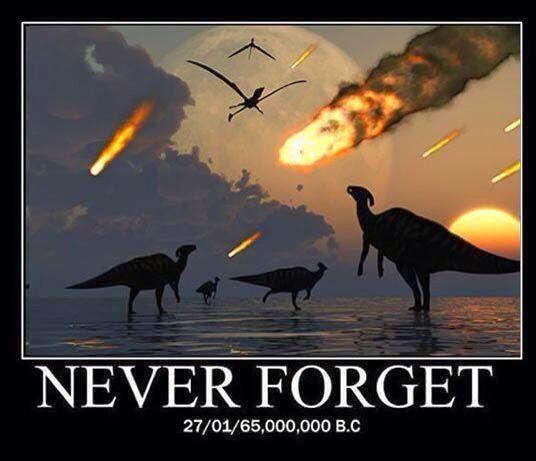
http://www.telegraph.co.uk/news/earth/environment/11276913/So-this-is-how-the-world-ends…-isnt-it.html
Aside from the rise of the machines, many potential threats have been identified to our species, our civilisation or even our planet itself. To keep you awake at night, here are seven of the most plausible.
Seeking a Climate Change – The Chronicle of Higher Education
cultural theory of risk assessment. Social norms, above all else, informed how people judged risks, she said. The public divided along two spectra: one measuring their support of social structure, running from egalitarian to hierarchical; the other, their devotion to individualism or communitarianism. The scales combined for four essential “worldviews.” – See more at: http://m.chronicle.com/article/Seeking-a-Climate-Change/149707/#sthash.vX66URJw.dpuf
cultural theory of risk assessment. Social norms, above all else, informed how people judged risks, she said. The public divided along two spectra: one measuring their support of social structure, running from egalitarian to hierarchical; the other, their devotion to individualism or communitarianism. The scales combined for four essential “worldviews.” – See more at: http://m.chronicle.com/article/Seeking-a-Climate-Change/149707/#sthash.vX66URJw.dpuf
http://m.chronicle.com/article/Seeking-a-Climate-Change/149707/
Climate Science Is Not Settled – WSJ
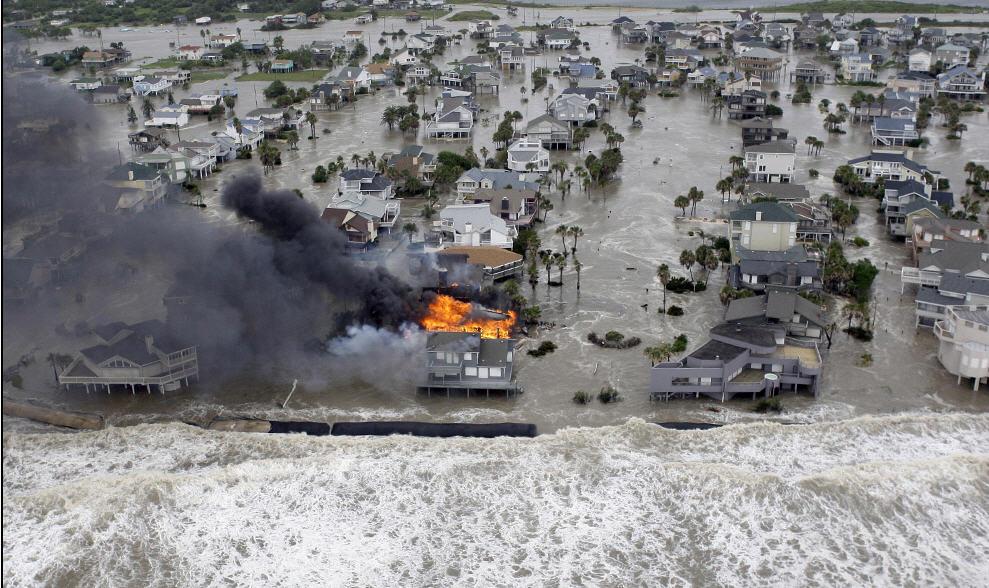 Policy makers and the public may wish for the comfort of certainty in their climate science. But I fear that rigidly promulgating the idea that climate science is “settled” (or is a “hoax”) demeans and chills the scientific enterprise, retarding its progress in these important matters. Uncertainty is a prime mover and motivator of science and must be faced head-on. It should not be confined to hushed sidebar conversations at academic conferences.
Society’s choices in the years ahead will necessarily be based on uncertain knowledge of future climates. That uncertainty need not be an excuse for inaction. There is well-justified prudence in accelerating the development of low-emissions technologies and in cost-effective energy-efficiency measures.
Any serious discussion of the changing climate must begin by acknowledging not only the scientific certainties but also the uncertainties, especially in projecting the future. Recognizing those limits, rather than ignoring them, will lead to a more sober and ultimately more productive discussion of climate change and climate policies. To do otherwise is a great disservice to climate science itself.
The Expanded Scope of Conflict Today
Wars are traditionally fought over territory. But the definition of territory has evolved to incorporate five domains: land, air, sea, space, and, most recently, cyberspace. These dimensions of “CLASS war” define the threats facing the world today. The specific triggers, objectives, and battle lines of such conflicts are likely to be determined, to varying degrees, by five factors: creed, clan, culture, climate, and currency. Indeed, these factors are already fueling conflicts around the world.
Just What We Need – Something Else To Worry About
 On July 23, 2012, the sun unleashed two massive clouds of plasma that barely missed a catastrophic encounter with the Earth’s atmosphere. These plasma clouds, known as coronal mass ejections (CMEs), comprised a solar storm thought to be the most powerful in at least 150 years.
Fortunately, the blast site of the CMEs was not directed at Earth. Had this event occurred a week earlier when the point of eruption was Earth-facing, a potentially disastrous outcome would have unfolded.
Analysts believe that a direct hit … could cause widespread power blackouts, disabling everything that plugs into a wall socket. Most people wouldn’t even be able to flush their toilet because urban water supplies largely rely on electric pumps.
“In my view the July 2012 storm was in all respects at least as strong as the 1859 Carrington event,” Baker tells NASA. “The only difference is, it missed.”
During the Carrington event, the northern lights were seen as far south as Cuba and Hawaii according to historical accounts. The solar eruption “caused global telegraph lines to spark, setting fire to some telegraph offices,” NASA notes. The infamous solar storm of 1921 caused “the entire signal and switching system of the New York Central Railroad below 125th Street to be put out of operation, followed by a fire in the control tower at 57th Street and Park Avenue.” global manufacturing capacity for high voltage transformers is estimated to be only about 70 units per year. A repeat of the 1921 space weather event might damage at least several hundred such units worldwide, with replacement of so many transformers taking a year or more
Though it’s impossible for scientists to predict exactly when or where the next solar storm happen, what they do know is that with more sunspots come more stoms. And the fall of 2013 is when the Sun is set to reach the crest of its 11-year sunspot cycle.
via How a solar storm two years ago nearly caused a catastrophe on Earth.
Can Innovation Save Our Future?
A Saudi oil minister once said, the Stone Age didn’t end for lack of stone. Ecologists call this “niche construction”—that people (and indeed some other animals) can create new opportunities for themselves by making their habitats more productive in some way. Agriculture is the classic example of niche construction: We stopped relying on nature’s bounty and substituted an artificial and much larger bounty.
Economists call the same phenomenon innovation. What frustrates them about ecologists is the latter’s tendency to think in terms of static limits. Ecologists can’t seem to see that when whale oil starts to run out, petroleum is discovered, or that when farm yields flatten, fertilizer comes along, or that when glass fiber is invented, demand for copper falls.
That frustration is heartily reciprocated. Ecologists think that economists espouse a sort of superstitious magic called “markets” or “prices” to avoid confronting the reality of limits to growth. The easiest way to raise a cheer in a conference of ecologists is to make a rude joke about economists.
If I could have one wish for the Earth’s environment, it would be to bring together the two tribes—to convene a grand powwow of ecologists and economists. I would pose them this simple question and not let them leave the room until they had answered it: How can innovation improve the environment?
via The World’s Resources Aren’t Running Out – WSJ.com.
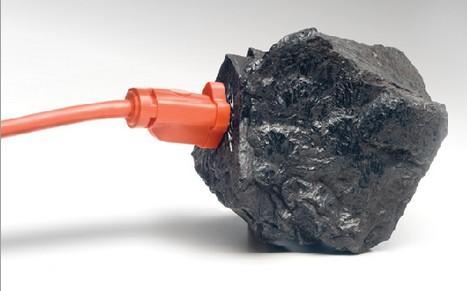 The technological optimists crowd writing, in the current issue of Wired magazine, visits huge Chinese projects to sequester the Co2 from burning coal. An interesting read
Did You Ever Think the U.S. Would be largest Energy Producer?
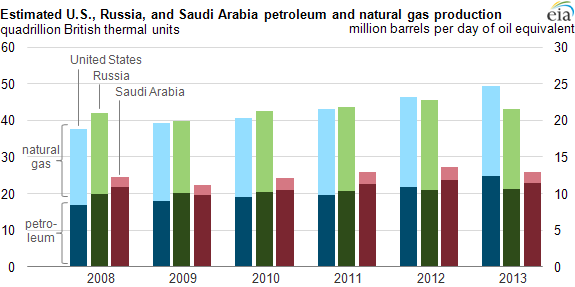 Since 2008, U.S. petroleum production has increased 7 quadrillion Btu, with dramatic growth in Texas and North Dakota. Natural gas production has increased by 3 quadrillion Btu over the same period, with much of this growth coming from the eastern United States. Russia and Saudi Arabia each increased their combined hydrocarbon output by about 1 quadrillion Btu over the past five years. Note: Petroleum production includes crude oil, natural gas liquids, condensates, refinery processing gain, and other liquids, including biofuels. Barrels per day oil equivalent were calculated using a conversion factor of 1 barrel oil equivalent = 5.55 million British thermal units (Btu).