
What Happend to Civilty and Modesty?

The problem is that over the past 40 years or so we have gone from a culture that reminds people of their own limitations to a culture that encourages people to think highly of themselves. The nation’s founders had a modest but realistic opinion of themselves and of the voters. They erected all sorts of institutional and social restraints to protect Americans from themselves. They admired George Washington because of the way he kept himself in check.

But over the past few decades, people have lost a sense of their own sinfulness. Children are raised amid a chorus of applause. Politics has become less about institutional restraint and more about giving voters whatever they want at that second. Joe DiMaggio didn’t ostentatiously admire his own home runs, but now athletes routinely celebrate themselves as part of the self-branding process.

In a famous passage, Reinhold Niebuhr put it best: “Nothing that is worth doing can be achieved in our lifetime; therefore, we must be saved by hope. … Nothing we do, however virtuous, can be accomplished alone; therefore, we are saved by love. No virtuous act is quite as virtuous from the standpoint of our friend or foe as it is from our standpoint. Therefore, we must be saved by the final form of love, which is forgiveness.”

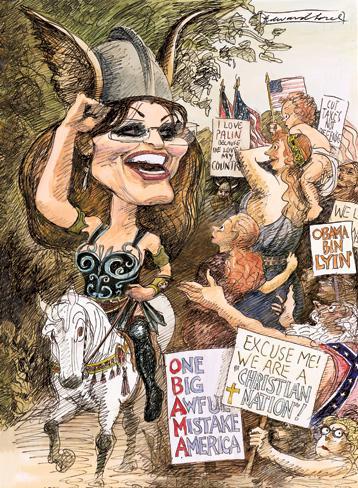
via Tree of Failure – NYTimes.com.

Cut Here. Invest There

Borrowing billions more from China to give ourselves more tax cuts does not qualify. Make no mistake, President Obama has enacted an enormous amount in two years. It’s impressive. But the really hard stuff lies ahead: taking things away. We are leaving an era where to be a mayor, governor, senator or president was, on balance, to give things away to people. And we are entering an era where to be a leader will mean, on balance, to take things away from people. It is the only way we’ll get our fiscal house in order before the market, brutally, does it for us.

To survive in the 21st century, America can no longer afford a politics of irresponsible profligacy. But to thrive in the 21st century — to invest in education, infrastructure and innovation — America cannot afford a politics of mindless austerity either.

The politicians we need are what I’d call “pay-as-you-go progressives” — those who combine fiscal prudence with growth initiatives to make their cities, their states or our country great again. Everyone knows the first rule of holes: When you’re in one, stop digging. But people often forget the second rule of holes: You can only grow your way out. You can’t borrow your way out.

via Cut Here. Invest There. – NYTimes.com.

Our New “Gilded Age”

The Boomers have been a terrible generation of political leaders. As in the case of most revolutionary generations in history, once the initial stab at change in their youth fell to the wayside, the real talent went into business and technology and changed the world–dramatically–for the better. The dregs went into politics and, in the process, have managed to thoroughly discredit it as a career and force for good in our society.

Last time it was this bad in America was those latter decades of the 19th century. The “revolution” then was the U.S. Civil War, and the crew that came out of that crucible was dramatically altered in character and vision and–most importantly–in personal connections. The bonds forged by war led to a lot of follow-on business development during a great and lengthy boom time. But it was an era much like today: frontier integration thanks to a rapidly expanding continental economy, the knitting together of a sectional economy into world-class “rising China” of its age, huge flows of people and FDI into the country–a miniature version of today’s globalization.

And during that age of booms and busts and the early populism that accompanied it, politics became a very dirty profession, so much so that when progressive icon TR decided to step into the fray, his wealthy NYC family begged him not to do so–it was considered such a huge step down from respectable obscurity. Few of us came name any politicians from that era (distant relation Grant being my favorite), but we all remember the industrial-financial titans, whose very names equal wealth: Rockefeller, Carnegie, Morgan, etc.

via Thomas P.M. Barnett’s Globlogization – Thomas P.M. Barnett’s Globlogization.

Born a Leftist

The research, based on 2,000 Americans, is published in the Journal of Politics. It found those with a strain of the DRD4 gene seek out “novelty” – such as people and lifestyles which are different to the ones they are used to. This leads them to have more liberal political opinions, it found.

The person’s age, ethnicity, gender or culture appeared to make no difference – it was the gene which counts. DRD4 is controlled by dopamine which affects the way the brain deals with emotions, pleasure and pain and can therefore influence personality traits.

UC Professor James Fowler said: “It is the crucial interaction of two factors – the genetic predisposition and the environmental condition of having many friends in adolescence – that is associated with being more liberal. “These findings suggest that political affiliation is not based solely on the kind of social environment people experience.”

via ‘Liberal gene’ discovered by scientists – Telegraph.

The Rise Of Youthful Secularism

The most rapidly growing religious category today is composed of those Americans who say they have no religious affiliation. While middle-aged and older Americans continue to embrace organized religion, rapidly increasing numbers of young people are rejecting it.

As recently as 1990, all but 7% of Americans claimed a religious affiliation, a figure that had held constant for decades. Today, 17% of Americans say they have no religion, and these new “nones” are very heavily concentrated among Americans who have come of age since 1990. Between 25% and 30% of twentysomethings today say they have no religious affiliation — roughly four times higher than in any previous generation.

Sociologists Michael Hout and Claude Fischer of UC Berkeley were among the first to call attention to the ensuing rise in young “nones,” and in our recent book, “American Grace,” we have extended their analysis, showing that the association between religion and politics (and especially religion’s intolerance of homosexuality) was the single strongest factor in this portentous shift. In religious affinities, as in taste in music and preference for colas, habits formed in early adulthood tend to harden over time. So if more than one-quarter of today’s young people are setting off in adult life with no religious identification, compared with about one-20th of previous generations, the prospects for religious observance in the coming decades are substantially diminished.

via Religion, politics: Walking away from church – latimes.com.

Is It 3rd Party Time In 2012?

“We basically have two bankrupt parties bankrupting the country,” said the Stanford University political scientist Larry Diamond. Indeed, our two-party system is ossified; it lacks integrity and creativity and any sense of courage or high-aspiration in confronting our problems. We simply will not be able to do the things we need to do as a country to move forward “with all the vested interests that have accrued around these two parties,” added Diamond. “They cannot think about the overall public good and the longer term anymore because both parties are trapped in short-term, zero-sum calculations,” where each one’s gains are seen as the other’s losses.

We have to rip open this two-party duopoly and have it challenged by a serious third party that will talk about education reform, without worrying about offending unions; financial reform, without worrying about losing donations from Wall Street; corporate tax reductions to stimulate jobs, without worrying about offending the far left; energy and climate reform, without worrying about offending the far right and coal-state Democrats; and proper health care reform, without worrying about offending insurers and drug companies.

via Op-Ed Columnist – Third Party Rising – NYTimes.com.

Sarah Palin the Sound and the Fury

Interesting that the author was a rural guy, who was sympathetic to her, before researching for this article.

Even as Sarah Palin’s public voice grows louder, she has become increasingly secretive, walling herself off from old friends and associates, and attempting to enforce silence from those around her. Following the former Alaska governor’s road show, the author delves into the surreal new world Palin now inhabits—a place of fear, anger, and illusion, which has swallowed up the engaging, small-town hockey mom and her family—and the sadness she has left in her wake.

via Sarah Palin the Sound and the Fury | Politics | Vanity Fair.

Religionization of American Politics

Obama isn’t the first president to have to deal with this. Abraham Lincoln, who never joined a church and was notoriously ambiguous and secretive about his religious beliefs, famously said, “The Bible is not my book nor Christianity my profession.” In his later years, despite denouncing those who were “enemies of” or “scoffed at” religion, he reiterated, “My earlier views of the unsoundness of the Christian scheme of salvation and the human origin of the scriptures, have become clearer and stronger with advancing years and I see no reason for thinking I shall ever change them.”

And Lincoln wasn’t alone, either. In fact, the United States was created by a very skeptical group of Founding Fathers. Continue reading “Religionization of American Politics”

The Balfour Declaration: The Origin of the Arab Israeli Conflict

According to Schneer (London 1900), an expert in modern British history at Georgia Tech, intrigue and British doubledealing defined the 1917 Balfour Declaration of British support for a Jewish “national home” in Palestine as much as bravery and vision, leading to the disillusionment, distrust, and resentment that still dominate the region today. British Jewish chemist and Zionist leader Chaim Weizmann orchestrated the campaign to persuade powerful men that support for Zionism would benefit Britain’s wartime cause and the ensuing peace. Perhaps most shrewdly, Weizmann lobbied former prime minister Arthur James Balfour, then a member of Britain’s War Council. Meanwhile, Grand Sharif Hussein and his sons had won British backing for an Arab kingdom, which would presumably include Palestine, and with British encouragement rebelled against the Ottomans in 1916. Through British duplicity, the French also believed they had a interest in Palestine. And three months after the Balfour Declaration, British prime minister Lloyd George proposed a separate peace with Turkey, with the Ottomans remaining in Palestine.

via Amazon.com: The Balfour Declaration: The Origins of the….

Behind Obama’s Education Reform

The U.S. spends more per pupil than any other but whose student performance ranks in the bottom third among developed nations isn’t failing its children for lack of resources but for lack of trained, motivated, accountable talent at the front of the class.

Before they successfully organized in the 1950s and 1960s, teachers endured meager salaries, political favoritism, tyrannical principals and sex discrimination against a mostly female work force.

But now a 165-page New York City union contract … not only specifies everything that teachers will do and will not do during a six-hour-57 ½-minute workday but also requires that teachers be paid based on how long they have been on the job. Once they’ve been teaching for three years and judged satisfactory in a process that invariably judges all but a few of them satisfactory, they are ensured lifetime tenure.

via The Teachers’ Unions’ Last Stand – NYTimes.com.